
It seems like common sense that you would start a fire in a cold fireplace. The cold is the reason you need the fire in the first place. However, you have to take care to preheat your fireplace properly, or you risk filling your home with smoke.
The basic principal that warm air rises keeps the smoke from your fires flowing upward out of your chimney instead of making its way into your home. When your fireplace hasn’t been used and cold air fills your chimney flue — which happens quickly especially if your chimney is on an exterior wall of your home — the dense, cold air can prevent the warm air and smoke from rising out of your fireplace. Gently preheating your flue can keep the smoke flowing in the right direction.
 The easiest and most popular method to preheat your flue is the torch method. Tightly roll newspaper into four or five “torches.” Open your damper and light the torches, one by one, holding them in your fireplace at the bottom of your chimneys flue. By the time the last torch has burned, your flue should be warm enough for your fire. You’ll be able to tell because the smoke from the torch will be drafting properly up the chimney. If you don’t have newspaper on hand, you also can use a blow dryer or fan to direct warm air up your chimney; the air doesn’t have to be hot, just warmer than the freezing air filling your chimney.
In addition to preheating your flue, there are other methods to help you chimney draft properly. Opening a window in the same room as your fireplace by an inch can help draw in cold air to feed your fire and keep the smoke flowing up the chimney. Fires should be built in a metal grate off the floor of your fireplace, and the fire should be built all the way in the back in the firebox. And of course, always use dry, seasoned firewood to make sure that the fire burns hot enough to direct smoke up the chimney. Never close fireplace doors, even partially, as the doors interfere with drafting, and glass doors can crack from the pressure of the fire.
If you follow all of our chimney prep tips and still have problems with smoke flowing backward into your home from your fireplace, give us a call. Improper drafting can indicate a more serious problem, such as a blocked chimney, a dirty chimney or an improperly sized flue. Our chimney experts can inspect your chimney, help you solve any problems and have your chimney drafting properly so you can enjoy your fireplace without the unpleasant smoke.
Your fireplace should be a source of warmth and comfort. Unfortunately, some fireplaces have the opposite effect. Some fireplaces actually cool portions of your home, especially if you don’t have a proper damper. This allows warm air to travel up and out of your home, while also allowing cold air and drafts to blow downward into your home. If your hearth is a source of an unfortunate winter’s chill rather than a source of comfort, here is what you need to know.
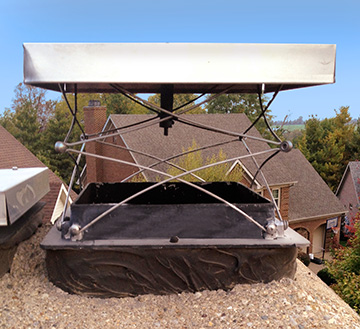 Your chimney damper is your fireplace’s first defense against the winter cold. Without your chimney damper, your hearth is an open window to the outdoors. This allow the warm air from your home to travel up and out of your chimney and allow cold drafts to blow down the chimney. To protect your home from cold air, be sure to have a working chimney damper. When your fireplace isn’t in use, your damper should be closed to keep the cold out. If your chimney’s throat damper is warped and failing, a top-sealing chimney damper is the best solution. A top-sealing damper is installed on the chimney top, and it closes entirely when the fireplace isn’t in use. This creates a tight seal to keeps out cold and moisture.
Another way to keep the cold from coming down your chimney is with a chimney cap. A chimney cap is essential for keeping water from flowing down your chimney, and it keeps debris and animals out of your chimney. A chimney cap also keep the cold from coming down your chimney. A chimney cap provides a physical barrier between cold air and your chimney. It works to block cold drafts that otherwise would find their way into your home.
An additional way to seal your home from the cold air is with a new set of fireplace doors. Factory-installed fireplace doors are largely ornamental, but a new, sturdier set of fireplace doors made from heavier materials can keep the warm in your home and block drafts from coming into your home. Fireplace doors have the added benefit of helping you capture more heat from your fireplace. when a fire is burning, the glass warms from the fire and then radiates the heat back into your home.
Don’t let a cold fireplace make your home uncomfortable this winter! Keep the warm air in your home and block cold drafts with a new damper, chimney cap or fireplace doors. If you suffer from a cold fireplace, call Fluesbrothers Chimney Service today! Our chimney experts can help you find a solution!
With a fire roaring in your fireplace, it can be tempting to throw in the odd bit of paper or cardboard box. Before you toss something other than typical fireplace fuel on the flames, however, you should be aware of some materials that you should never burn in your fireplace. There are several materials that pose a fire or health hazard to your family if you burn them. Here are some materials you should never burn in your fireplace.
 If you have scraps of lumber to get rid of, throwing it in the fireplace could seem like a win-win: You get rid of the wood, and you get some free fuel for your fireplace. Treated lumber has no place in your fireplace, however. The chemicals on the wood are highly toxic, and burning them in your fireplace can fill your home with hazardous fumes.
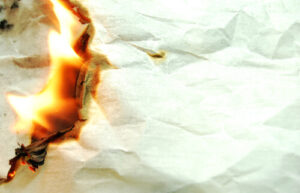
A roaring fire and Christmas morning go hand in hand. Why not throw your wrapping paper in the fireplace to get rid of it quickly and easily? Like treated lumber, the colored paper used to wrap presents can fill your home with unhealthy fumes. Additionally, putting paper in the fireplace
can cause a dangerous flareup that could cause your chimney to ignite.
Cardboard shouldn’t be burned in the fireplace for the same reason that wrapping paper shouldn’t — colored ink gives off toxic fumes. The sudden combustion of the cardboard can also cause a spike in the fire’s temperature, possibly igniting a chimney fire.
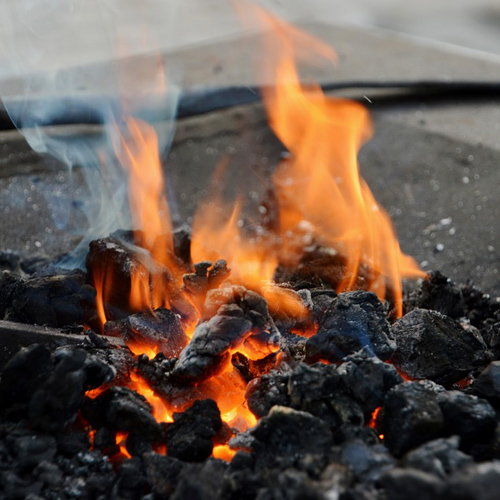 Charcoal
Cooking over an open fire is surely romantic, but when it comes to cooking over charcoal, that should be done outside exclusively. Charcoal releases carbon monoxide when burned, and that carbon monoxide can poison the people or pets in your home.
Wet wood is difficult to ignite and keep burning, but the problems with burning wet wood go far beyond that. Improperly seasoned or wet wood burns at a lower temperature than dry or properly seasoned firewood. When wood isn’t burning efficiently, it generates more smoke. That heavy, cooler smoke causes condensation that leads to a rapid buildup of dangerous creosote. Wet firewood accelerates the buildup of creosote, putting your chimney at risk of a fire.
If you have a Christmas tree, chopping it up to put in the fireplace after the holidays seems sensible. But burning a Christmas tree isn’t ideal. First, the wood hasn’t been properly cured and will lead to excessive creosote buildup. Most Christmas tree species also contain resins that burn rapidly and at high temperatures that can cause your chimney to ignite.
Ultimately, you should never burn anything in your fireplace that wasn’t intended as fuel for your fireplace. That means only dry, seasoned firewood should go into a wood-burning fireplace, only pellets — or other bio fuels deemed appropriate by your fireplace manufacturer — should go into heating fireplaces and nothing should go into your self-fueled gas fireplace or stove.
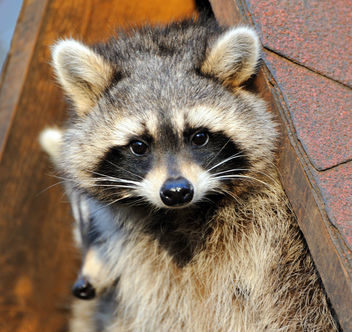
It might not seem like it, but your chimney is an appealing location for animals. Birds, bats and many kinds of critters and pests have been known to find their way into chimneys. During the heat of the summer, chimneys provide a cool, shaded place. In the fall and winter, they provide protection from the cold and wind and are warm. From mice, rats, squirrels and raccoons to birds and bats, here’s what you need to know about critters in your chimney.
 The problem with animals in your chimney
While your chimney is an ideal habitat from an animal’s perspective, it is not ideal for you. Animals in your chimney can introduce plenty of problems. If they find their way around your chimney damper and into your firebox, they are in your home. They bring diseases, food and debris in your chimney, and they can cause foul smells to fill your home. Some animals will build nests in your chimney that block the flow of smoke and pose a fire hazard. In short, an animal intrusion in your chimney is a major problem.
If you hear an animal in your chimney, or see it entering/exiting through your chimney top, it’s time to call the professionals. Removing a bird or animal from your chimney by yourself can be dangerous for both you and the animal. A trained professional can assess what animal is in your chimney and remove it for you. After the animal has been removed, you will need to have your chimney swept and inspected to remove any debris left behind by the animal and to check for damage that could have been caused by the animal.
The best way to deal with animal intrusions is to prevent them. Most chimney sweeps recommend installing a chimney cap with a sturdy wire cage to the top of your chimney to block their access. A top-sealing chimney damper is even more secure. These dampers affix to the very top of your chimney. When the fireplace isn’t in use and the damper is closed, a tight seal is formed around the top of your chimney, preventing even the smallest birds and animals from entering.
Concerned about animal intrusions in your chimney, or already dealing with one? Call Fluesbrothers Chimney Service to schedule an appointment! We can clean up after an animal intrusion and inspect your chimney to make sure it’s safe for use, or we can install a chimney cap to prevent any future animal intrusions.
If you’re looking to add a fireplace to your home, your mind probably turns first to the style you’d like to achieve and the fuel type you prefer. There’s one other fireplace decision you’ll have to make when you begin shopping around: traditional masonry fireplace or prefabricated fireplace. While most people understand what it means to have a traditional masonry fireplace, here’s what you need to know about prefabricated fireplaces.
As the name suggests, prefabricated — sometimes referred to as manufactured or factory-built — fireplaces are constructed entirely off site. The fireplace and chimney are designed and safety tested to be installed as a complete system. Prefabricated systems generally include a firebox, sometimes fitted with refractory panels, as well as a chimney, firestop, flashing and a chimney cap. Prefabricated fireplaces have to be installed following strict manufacturer’s guidelines to ensure that the fireplace will work safely.
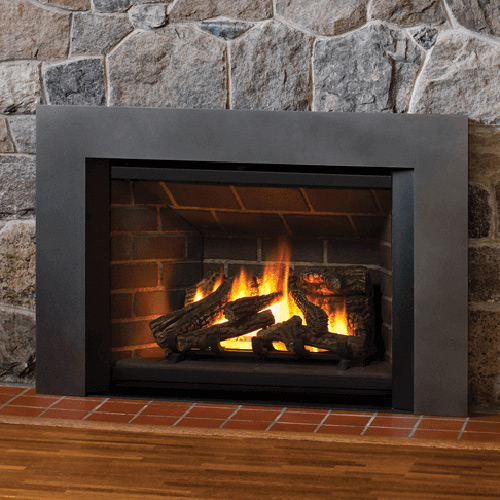 Prefabricated fireplaces have been increasingly popular since they were introduced to the market roughly 40 years ago, and there are some very obvious reasons they’re popular. First and foremost, prefabricated fireplaces are often a more affordable option, and can be installed more quickly, than traditional masonry fireplaces. That’s because masonry fireplaces truly are works of art. They take careful crafting, many supplies, and they take a lot of time and hard work to construct.
Prefabricated fireplaces also are more versatile. They aren’t nearly as heavy as traditional masonry fireplaces, which means they don’t require the solid foundation that masonry fireplaces do. They can be installed where you aren’t able or don’t intent to build an extensive foundation. They also insulate the heat from the fireplace well, so most prefabricated fireplaces don’t require the clearances that traditional fireplaces do. Because their installation has less stringent requirements than traditional masonry fireplaces, factory-built fireplaces can be installed in nearly any room and even on second floors of homes. Some factory-built fireplaces can even be fitted into an existing hearth space.
While prefabricated fireplaces do offer plenty of benefits, they might not be for every home. Some of the things to consider with prefabricated fireplaces is that many prefabricated fireplaces usually aren’t designed to heat an entire home; they’re more for ambiance and low levels of supplemental heat. Prefabricated fireplaces also don’t last as long as traditional masonry systems. That’s not to say they’re not durable, but after a few decades, you might need to replace parts of, or even entirely replace, your prefabricated fireplace.
If you’re looking for a new fireplace for your home and trying to decide whether a prefabricated fireplace is right for your home, Fluesbrothers Chimney Service can help! We can evaluate your home and your fireplace needs and help you choose whether, and which, a prefabricated fireplace is right for you.
Fireplaces are meant to keep your home warm and cozy. They can even be used to lower your reliance on your furnace and bring you lower energy bills as a result. That makes it all the more frustrating when cold air finds its way into your home through your chimney. Whether you feel a constant cold draft when you’re chimney’s not in use or you feel gusts of cold air when it’s particularly windy, you need a solution.
While many fireplaces are equipped with fireplace doors, few are more than ornamental. You can replace your fireplace doors with heavier grade ceramic doors. These will do a better job of insulating your fireplace. These doors will help block any drafts coming down your chimney and help prevent warm air from exiting your home through your chimney. As an added bonus, these doors can help you capture more of the heat from your fireplace when it’s in use because they absorb then radiate out the heat from your fireplace.
Consider a Top-Sealing DamperWhen your fireplace is in use, your chimney serves as a necessary escape for smoke. When the fireplace isn’t in use, your chimney is like an open window. It allows hot air to escape your home and cold drafts to find their way in. A top-sealing chimney damper can solve this problem. Unlike traditional throat dampers, which feature a metal-on-metal closure, top-sealing dampers feature a gasket closure that fully seal off the chimney opening when the fireplace isn’t in use.
In modern, air-tight homes, any appliance that requires air, whether it’s a kitchen vent, bathroom vent, furnace or gas clothes drier, can create a vacuum. As these appliances utilize the air within the home, air can’t be drawn in through windows or gaps in the home to replace the lost air. As an alternative, cold air is drawn down the chimney to replace lost air in the home. While you might have to look for a permanent ventilation solution to this problem, you might be able to lessen the chimney draft by aiming to use ventilation fans less or cracking a window slightly near the appliance that’s being operated.
Often, when cold air is being drawn down the chimney, the cause is an improperly sized chimney. Chimneys that are too short or too large for the fireplace appliance can allow cold air into your home through the chimney. If you notice that cold drafts and bursts of air are coming down the chimney, you might consider having your chimney inspected by a certified chimney technician.
If you’re frustrated that your fireplace is bringing in cold air, rather than helping to keep your home cozy, call Fluesbrothers Chimney Service to schedule an appointment today! We can evaluate your chimney and help you find a solution, whether it’s installing fireplace doors or a top-sealing damper, addressing an airflow problem or resizing your flue.
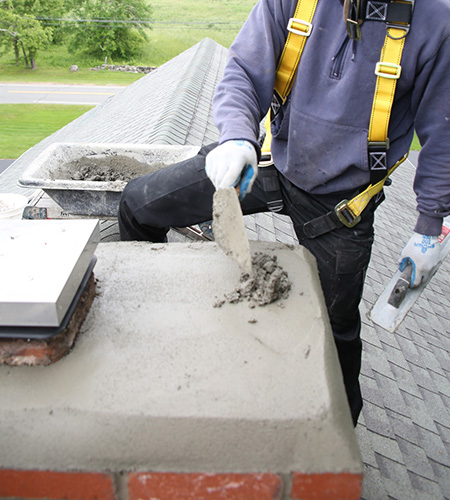 Chimney crown repair.
Chimney crowns are among the most common chimney repairs. This is because the chimney crown was not properly constructed to begin with. The chimney crown is the masonry topper to your chimney. It directs water downward and away from your chimney flue. Also, it provides an overhang so that water doesn’t flow freely down the outer masonry of your chimney. Masons will often construct the crowns improperly, without an adequate slope to deflect water or without an overhang to protect the chimney. Another commonly cut corner is the material of the chimney crown: Masons will often use simple mortar. These break down quickly, rather than the masonry materials recommended for chimney crowns. When your chimney crown breaks down, it can allow water into your chimney flue or into the masonry walls. This causes a gradual breakdown of the chimney structure.
 Tuckpointing.
Masonry is porous. It absorbs rainwater, snow, and other atmospheric moisture. Once inside the masonry, the water expands, causing cracking and crumbling. Mortar joints tend to break down in this way faster than the bricks of the chimney. The crumbing away of the mortar joints can compromise the integrity of your chimney’s structure. Plus, it gives your chimney an unsightly appearance. To fix crumbling mortar joints, masons will perform tuckpointing. The deteriorating mortar is scraped away, and new mortar is used to smooth in the gaps.
Atop your chimney, there should be a chimney cap covering the chimney opening. This prevents water from flowing down the chimney flue. Those caps can corrode or become dislodged, and they do need to be replaced from time to time. A new chimney cap upgrades the look of your home’s roof-line. In addition, keeping your chimney and fireplace safe from water, sudden down-burst of winds, and even animal intrusions.
Do you have a gas fireplace but long for the crackle of a traditional wood-burning fire? Or do you have a wood-burning fireplace that sits largely unused because of the hassle it takes to build and maintain an inefficient wood fire? You don’t have to deal with your current fireplace any longer; you can convert your fireplace from gas to wood, or from wood to gas!
 Converting your gas fireplace to a wood-burning fireplace
The process of converting your gas fireplace to a wood-burning fireplace hinges on the type of gas fireplace you have. If you have an open-hearth fireplace with gas logs, it could be as simple as capping the gas line and making sure the chimney is in good working order and ready for a wood-burning fire. If you have a prefabricated gas fireplace that was installed directly into the home, however, the process could be more extensive. That would involve the removal of the existing gas fireplace and the construction or installation of a new wood-burning fireplace in its place. The good news is that if a gas fireplace already stood on the spot, there is likely room for the hearth and a spot for the proper ventilation of your new wood-burning fireplace.
Usually the process of converting a wood-burning fireplace to a gas fireplace is much easier. An open-hearth fireplace can be fitted with a gas fireplace insert. Or, the fireplace can be fitted with a set of vented or ventless gas logs. Obviously, a gas line will need to be run to fuel your new gas appliance. You might also consider other conveniences, such as having your new gas fireplace wired to a switch or to a thermostat to help control the burn of the fire as it relates to the temperature of your home.
Converting your fireplace fuel type isn’t only about your fireplace; it’s also about your chimney. Chimneys generally are designed to deal with a specific fuel type. When you have your fireplace fuel type changed, your chimney will need to be inspected to see if it will function safely with your new fireplace. The chimney may need to be relined, or a new chimney may need to be installed to properly vent your new fireplace.
If you are ready to explore the possibility of converting your gas fireplace to a wood-burning fireplace or your wood-burning fireplace to a gas fireplace, call the fireplace experts at Fluesbrothers Chimney Service today! We can inspect your existing fireplace and make recommendations for the type of fireplace that’s right for your existing hearth. We could have you enjoying your new wood-burning or gas fireplace this winter!
People have enjoyed the warmth and ambience provided by a crackling wood fires since long before there were fireplaces in which to burn them. As wonderful as wood is, however, many have lost their love for it due to the messy ashes and smell that are left behind. Suffice it to say that, for many, their love affair with wood-burning fireplaces has burned out. For those who want the ambience without the drawbacks, Fluesbrothers Chimney Service has two possible solutions to your problem: direct vent and vent-free gas logs.
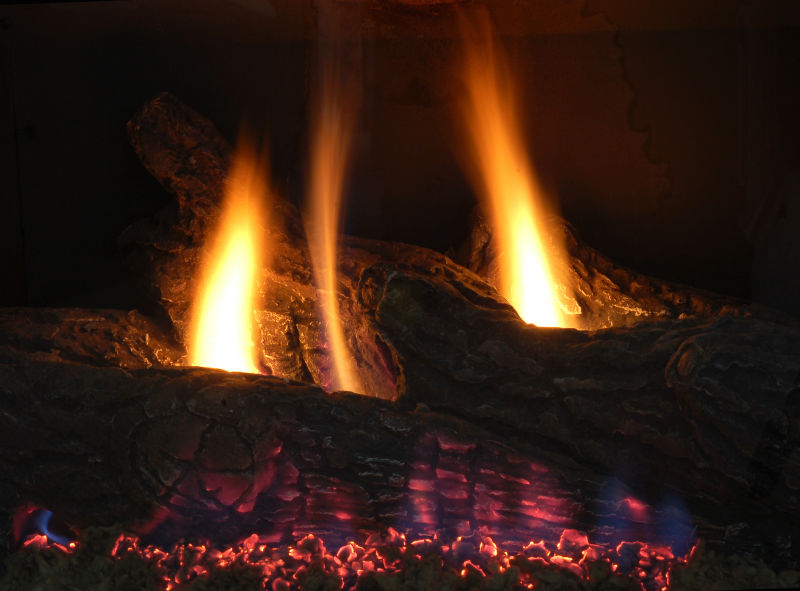 Vented Gas Logs
Vented gas logs are designed to use right in your traditional wood-burning fireplace, with one slight modification—the addition of a gas line. These probably provide an experience that is closest to that of burning real wood; realistic flames wrap around the edges of the logs and climb high into your firebox, similarly to how wood burns naturally. These units have been around for over 20 years now and are a tried and true method.
When in use, vented gas logs require that your damper be opened fully, as they do not burn as efficiently or cleanly as their vent-free counterparts. They do still, however, burn more cleanly than a wood fire. On a size-by-size comparison, vented gas logs are cheaper than vent-free sets of the same size.
The main attraction of vent-free gas logs is the amount of heat they are capable of putting out into your living space. This additional heat is created because the unit operates with your fireplace damper closed. This causes heat to circulate into the room rather than up into your chimney. This feature results in increased efficiency and a lower overall cost for heating your room.
When is use, vent-free gas logs burn so hot that nearly 100% of the fuel is combusted, resulting in negligible amounts of soot and carbon monoxide. An oxygen depletion sensor (ODS) is present on vent-free units as an additional safeguard to ensure that the burner will be turned off prior to the oxygen level in your room reaching a dangerous level.
It is always nice to have options. If you find yourself unhappy with your wood-burning fireplace and the extra hassles associated with maintaining it, a gas unit is something worth considering. It is really the best of both worlds. When you are finally ready to take the next step, contact the professional staff at Fluesbrothers Chimney Service. We look forward to hearing from you!
When asked to think of warmer months, the sound of birds chirping probably comes to mind. The sound, when heard out in nature, can be quite soothing. However, one can imagine how hearing those same sounds coming from the inside your chimney could get old quickly. Let’s face it—these sounds aren’t music to everyone’s ears. One possible culprit for these noises in your chimney is the “flying cigar” or, as it’s more commonly known, the chimney swift.
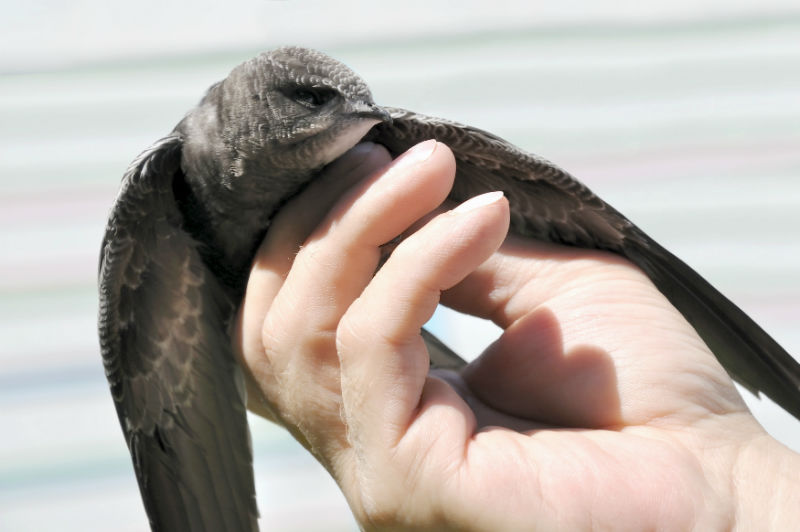 These tiny and extremely adaptable birds are quite common across much of eastern North America from southern Canada east of Saskatchewan, south through Texas and to the Atlantic seaboard. Long before European settlement of North America, chimney swifts historically nested and roosted in hollow trees, caves, and on cliff faces; as these nesting areas were slowly removed because of westward expansion and clearcutting, the birds were forced to seek comparable nesting locations elsewhere. They now prefer nesting in chimneys and other artificial sites, including open wells, air vents, garages, silos and barns. The main requirement for a desirable location is shade from sunlight and the elements. As such, one can easily see why chimneys are such an appealing destination.
Chimney swifts are again noticing a significant decline in nesting and roosting locations, which, in turn, is causing a decrease in the overall population of the species. Chimney swifts are protected under the Migratory Bird Treaty Act, which prohibits the removal of any migrating bird without a federal permit. In addition to the prohibited removal, these birds always return to the same nesting spots year after year; loosely translated, if you had a nest in your chimney last year, you can expect the same bird family to return this year.
As more and more homeowners opt to cap their chimneys (typically for reasons other than keeping the swifts out), the birds are sent scrambling to find another nesting location; because two families of swifts won’t typically occupy the same location, one can see how the removal of a few nesting locations here and there can have a ripple effect across the whole chimney swift population.
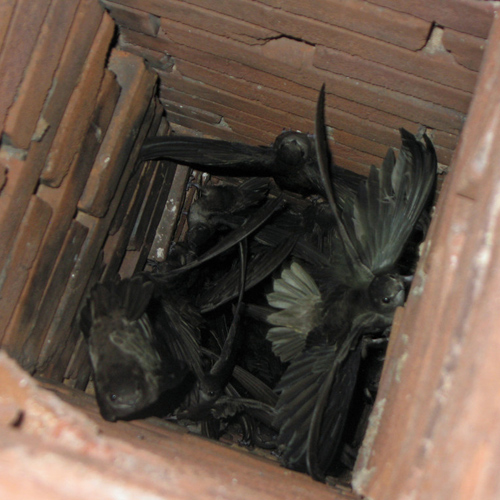 Chimney swifts aren’t all bad though; despite the fact that some homeowners might beg to differ. A single family of these birds can eat upwards of 12,000 insets a day, which can include only small things like mosquitoes, gnats, termites, and biting flies. I, for one, will never complain and/or shed one single, solitary tear about the prospects of fewer gnats and mosquitoes!
If, in spite of the positives of having the birds around, you decide you’d rather take steps to prevent them from taking up residence in your chimney, preventative measures must be taken. The good news is that it’s very simple to bird-proof your chimney; installing a chimney cap will keep the birds from returning to your chimney next year. The key is to have it installed while the birds are living down south since it’s illegal for a chimney sweep to remove the nest, eggs or any migratory birds.
Those bird nests and other chimney swift remnants can really put your family in danger. They’re real health and fire hazards that need to be addressed. If you’re at your wit’s end with chimney swifts, we encourage you to contact the certified professionals at Fluesbrothers Chimney Service. You can be sure we’ll keep your chimney, your family and your home safe. Give us a call today. You’ll be glad you know about Fluesbrothers.