
Stucco is a common finish material used in residential and commercial construction. When properly installed, it can hold up for years and provide you with protection and aesthetic appeal. …until it doesn’t, that is.
You may suddenly find yourself wanting to change the look and feel of the stucco finish or you might even be finding some places on the original stucco that need masonry repairs. So is it possible to put new stucco over old stucco? Absolutely!
But before you schedule that appointment with Ozark Stove and Chimney, let’s dive into this topic a little more so you can make a more informed decision on whether or not you should apply new stucco over old stucco.
When weighing your options, it’s always great to start with taking into consideration the benefits of putting new stucco over old stucco. Some of the reasons this is a good idea includes:
 Cost Savings: Going the route of putting new stucco over old stucco is generally more affordable because there is less labor and material costs compared to a full removal and replacement of the stucco.
 By now, you’re probably getting excited about the possibility of updating your stucco. However, there are a few limitations to consider before you start a new Pinterest Board for stucco inspiration. Here are a few things to think about.
These are tough questions to answer without the help of a certified professional. It’s a good thing there’s a knowledgeable team in the Greene County & Benton County area that can help!
The very first step, even before prepping your home, is to have someone evaluate the integrity and stability of the existing stucco. We want to determine if the old stucco is suitable for a new application and ensure there are no other underlying issues that need to be fixed first.
After we have determined that it’s ok to go ahead with applying a new stucco layer, the following steps will take place:
 Preparing the Surface: Minor cracks won’t interfere with the application of new stucco. However, we will look for sections of loose stucco and knock them off. After removing the loose sections, the surface needs to be thoroughly swept clean.
There’s clearly a lot to know about applying stucco. Although there are plenty of video tutorials online for how to do this yourself, we still recommend you hire someone with the knowledge and experience to ensure each step is done correctly – especially when even the slightest mistake can lead to moisture-related problems and costly repair bills down the road.
Give Ozark Stove and Chimney a call today at 417-201-6585 to book your next appointment. Our team is dedicated to providing only the best experience to our customers, and we happen to offer a lifetime warranty on all of our work too – can’t beat that. Rest assured, when you work with us, you’ll be happy with your new stucco for years to come.
Keeping a chimney safe and efficient requires periodic maintenance that includes sweeping, inspections and timely repairs. But even the best-maintained chimneys occasionally experience problems. Fluesbrothers Chimney & Fireplace of Kansas City, KS, would like to outline five of the more common chimney problems and why they happen.
 1. Chimney fires
Most chimney fires are started when creosote ignites inside the flue. Creosote is a byproduct of smoke condensation and can be solid, sticky or puffy in form. Big chimney fires are obvious, but smaller ones may not be.
Many chimney fires start and go out on their own, usually resulting in some level of interior flue damage. The first and best step toward reducing the chances of a chimney fire at your home is to have your flue professionally inspected and swept once a year.
There are several possible causes of smoke backing up out of the fireplace.
Squirrels, birds, rodents, raccoons and other small animals like to get into chimneys for shelter and to give birth. Tree debris, such as leaves and twigs, also can find its way into a chimney. These obstructions narrow your flue and prevent smoke from drafting properly. In most cases, the reason for this problem is a severely damaged chimney cap or no chimney cap at all. A secure full-width cap will keep debris out of the chimney.
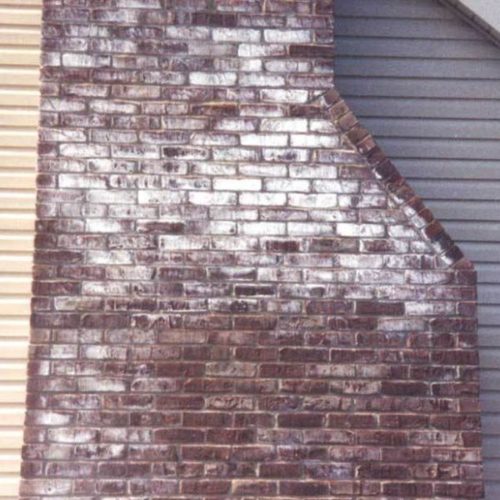
Chimney leaks can start in many places within the chimney system, including the chimney cap, chimney crown, flashing and masonry. Damage to any of these parts of a chimney can lead to ongoing water intrusion and widespread damage to other areas of the system as well as nearby home building materials.
Excess moisture in the flue, which is usually the result of a chimney leak, can cause strong musty odors in the flue. The smell will be worse when moisture mixes with large amounts of soot, oily creosote and nesting materials. Dead animals can also cause an odor in a chimney. Certain species regularly become trapped inside flues and die, unable to get back out. You can prevent most smelly chimney problems with regular chimney sweeping and a quality chimney cap.
Fluesbrothers is ready to help with all these common chimney problems and any other issues that might arise with your chimney or fireplace. We provide expert chimney cleaning, chimney repairs and thorough chimney and fireplace inspections. Speak with a chimney professional today at (913) 236-7141 or reach out with our simple contact form.
Regardless of how often you use the fireplace, you will eventually need a chimney sweep to inspect and clean the chimney. Your chimney sweep plays an essential role in helping to prevent chimney fires, masonry damage, and other issues, so your family can enjoy a safe fireplace experience.
In addition, the National Fire Protection Association (NFPA) recommends homeowners with solid, or fossil fuel heating appliances have annual chimney inspections and cleaning when necessary. So, watch out for these five warning signs that are telling you it’s time to call a chimney sweep:
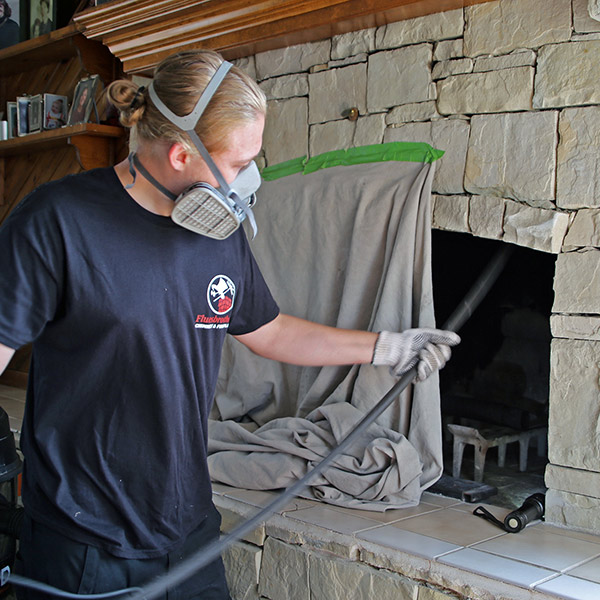 Smoky Fireplace
It is not normal for a fireplace to fill up with smoke and is a sign you need a chimney sweep. A smoky fireplace is an indication that the smoke and exhaust are not venting out the chimney efficiently.
It could be due to a flue obstruction, creosote build-up, masonry damage, or another issue affecting the draft. It could also cause poisonous carbon monoxide gas to leak into your living space. So, please avoid using the fireplace until it has been inspected by a Certified Chimney Sweep®, like Fluesbrothers.
Burning wood in the fireplace creates creosote; a carbonous compound naturally produced during combustion. Most of the creosote vents out the flue; however, some of the material accumulates on the interior masonry walls, flue liner, smoke chamber, and other areas inside the chimney. You may even notice this dark and crusty substance on the damper and firebrick inside the firebox. Creosote is a volatile and highly flammable organic material.
The Chimney Safety Institute of America (CSIA) recommends professional chimney cleaning when there is 1/8-inch or more creosote build-up in the flue. You should at least have your chimney professionally swept annually.
When it is more difficult to light or maintain a fire or your fires are not burning as efficiently as they should, it is another vital sign that you need a chimney sweep. Proper draft flow is essential for lighting and maintaining efficient fires. When an obstruction or other issue is affecting the chimney draft, there is a risk of a dangerous backdraft that will push smoke, soot, and hot debris into your home if the issue is not resolved.
At Fluesbrothers, we get a lot of calls throughout the year from customers about foul odors in the chimney. Trapped wildlife, decaying organic material, and even mold spores from a chimney leak can cause produce a bad smell in your chimney. To prevent the problem from worsening or water damage from a leaky chimney, schedule a chimney cleaning with a Certified Chimney Professional® as soon as possible.
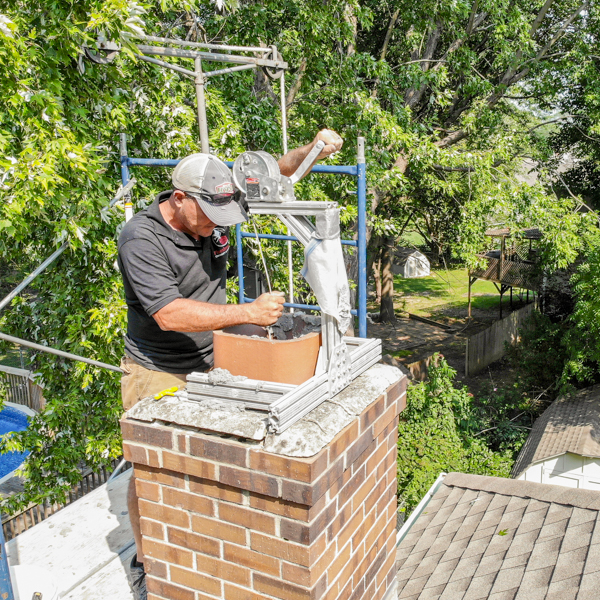 Pieces of Clay Liner Material in the Firebox
Many flue liners in the Kansas City area still have the original clay or terracotta liners. A flue liner is essential for containing the fire in the chimney, so the heat and flames don’t spread to combustible materials and start a house fire. So, if you notice pieces of clay material in the firebox, you need to call a chimney sweep right away.
We can quickly and efficiently repair your damaged flue liner with Heatshield®. It’s a refractory sealant that repairs and strengthens damaged liners and other cracks, gaps, and spalling brick in the chimney, allowing you to enjoy a safe fire-burning experience when using the fireplace.
When you need to have your chimney inspected or cleaned, the certified chimney sweeps at Fluesbrothers are here to help. We provide professional chimney inspections, cleaning, and high-quality masonry repairs throughout the Greater Kansas City area. Speak with a chimney professional at (913) 236-7141 or contact us online today!
Fireplace screens have been around a long time – probably since the first person noticed fiery embers popping out of the fireplace and setting fire to things near the firebox. But it’s amazing how many people still operate their fireplaces without a screen. Fluesbrothers Chimney & Fireplace of Kansas City, KS, would like to share some obvious – and not-so-obvious – reasons you should consider investing in a good fireplace screen.
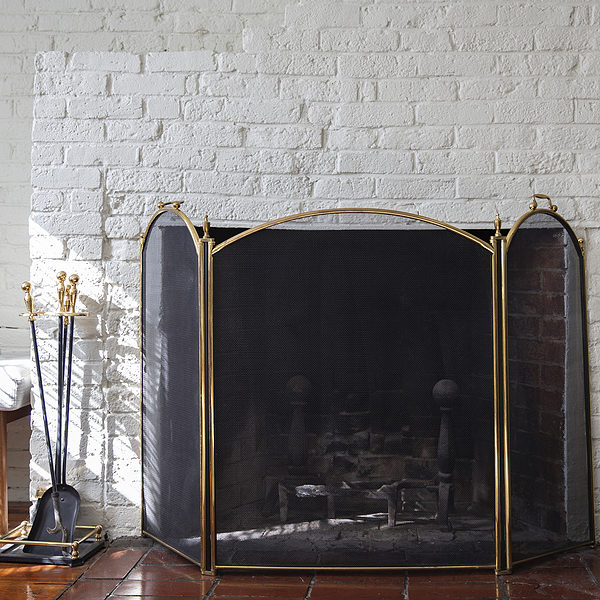 What is a fireplace screen?
Fireplace screens are barriers that are placed just outside a fireplace. Typically made of metal or another non-flammable material, a fireplace screen should be bought in a size that provides solid protection from particles that could exit the firebox while a fire is burning.
Here are the four reasons to use a fireplace screen.
A wood-burning fireplace can send sparks and embers out of the firebox in two ways: during a downdraft of air coming down the chimney; and when burning logs naturally settle and pop. The fiery particles that shoot out of a fireplace can easily cause burn marks on rugs and furniture. They can also cause nearby materials to catch fire. Additionally, a person too close to the fireplace can be injured by the hot materials. A good fireplace screen significantly reduces the likelihood of the above scenarios.
Every year, young children and pets become injured from playing near an active fireplace. Older kids and adults should know better than to play close to a fire, but young kids and pets don’t always understand this. A fireplace screen places a secure barrier between the fireplace and the room and the people in it. The screen will do a very good job of preventing burns to skin and clothing from catching on fire. It’s important to note that young children should never be left unattended in a room with an active fireplace – whether or not a fireplace screen is being used.
If you use a gas fireplace and have glass doors, those doors become very hot during a fire. While not as dangerous as flames, hot glass doors can injure children and pets. By installing a fireplace screen, you’ll keep curious children and rambunctious pets away from the glass.
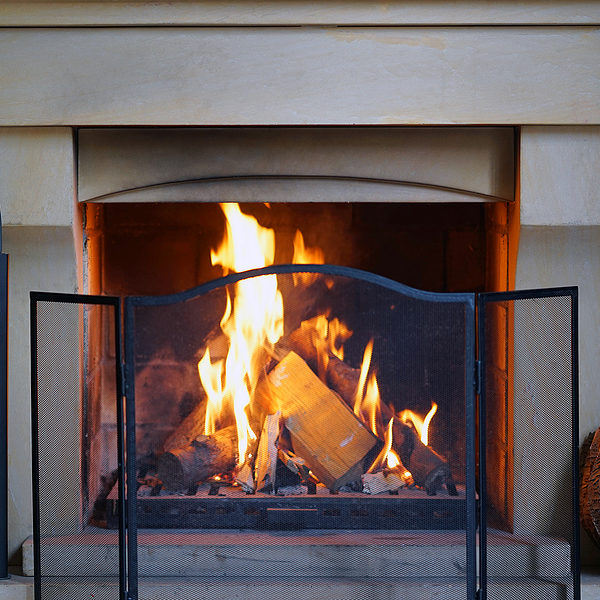 4. Enhance the appearance of your hearth area
Aside from their safety features, fireplace screens are also nice-looking amenities that bring a touch of elegance to the area around your fireplace. Many different styles, sizes, colors and finishes are available, so you’ll find it easy to add just the right accent to your hearth.
Fluesbrothers is committed to helping our Kansas City-area customers enjoy
their fireplaces (and chimneys) safely. Fireplace screens are one way to accomplish this. Our services include chimney cleaning, chimney and fireplace repairs and complete system inspections, all geared toward bringing safety and comfort to your home. When it’s time to have your fireplace or chimney looked at, contact the professionals at Fluesbrothers at (913) 236-7141. You can also reach out through our handy contact form.
Many residents in Shawnee, Lee’s Summit, and the surrounding Kansas City area have a gas fireplace. They are popular in single-family homes, townhomes, and condominiums. Unlike a traditional wood-burning fireplace, gas fireplaces burn cleaner without the creosote, soot, and ash that require constant cleaning. Also, a gas fireplace doesn’t require the clearance that a wood fireplace needs, so it can be installed practically anywhere in the home, even in smaller living spaces. While a gas fireplace doesn’t require much maintenance, they require occasional cleaning. The following guide will help homeowners properly care for their gas fireplace.
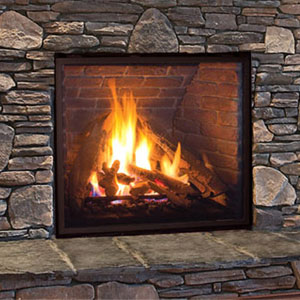 Review the User’s Manual
It’s essential to review the user manual that came with your gas heating appliance to familiarize yourself with the safety, operating, and maintenance guidelines to properly care for your gas fireplace and logs. Your manual will also provide troubleshooting tips for common gas fireplace problems. If your manual is not handy, you may be able to download it online. Otherwise, call Fluesbrothers Chimney & Fireplace in Kansas City at (913) 236-7141 or your local gas fireplace specialist for assistance.
The National Fire Protection Association (NFPA) recommends all fireplace owners with solid or liquid fuel appliances have annual safety & maintenance inspections. While gas fireplaces burn cleaner than wood, yearly safety and maintenance inspections are still essential to ensure they operate safely. A comprehensive multi-point visual inspection of the chimney, vents, and attached heating appliances is the best way to ensure that your gas fireplace is venting correctly and is safe to operate. Also, masonry cracks, flue obstructions, worn parts, loose fittings, and other issues can often be detected early, reducing repair costs and prolonging the lifespan of your gas fireplace.
A gas fireplace doesn’t need the frequent cleaning that a wood-burning fireplace requires to remove soot, creosote, and ash. However, gas fireplaces do require annual cleaning to eliminate any dust, dirt, pet hair, and other particulates trapped inside the appliance to prevent damage to the burner, ceramic logs, and other internal components. Fortunately, cleaning a gas fireplace is relatively easy, and you can do it yourself with a few handy tools.
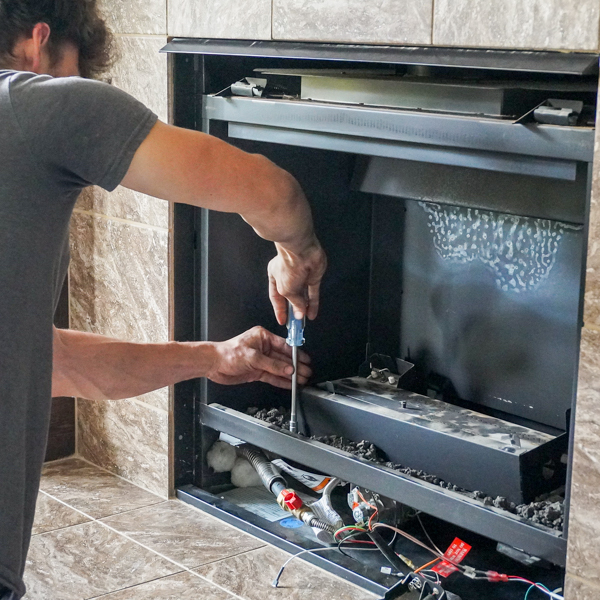 Signs Your Gas Fireplace Needs Maintenance
Fluesbrothers has NFI-certified technicians that provide gas fireplace inspections, maintenance, cleaning, and repairs in Olathe, Independence, and surrounding communities throughout the Kansas City KS/MO Metro area. Call (913) 236-7141 or contact us at https://fluesbrotherskc.com/schedule-appointment/ to schedule maintenance for your gas fireplace today!
 The chimney and chimney liner work together to protect your Kansas City home and keep your family safe while you’re enjoying the warmth of a fireplace. The chimney liner is an essential safety component that protects the masonry from the high heat and flames in the firebox. When the chimney liner is damaged due to its age, moisture, or other issues, there is an increased risk of the intense heat spreading to nearby combustible building materials, such as the attic or a wood-framed chimney chase, that can cause a house fire. A damaged liner also increases the risk of exposure to dangerous carbon monoxide fumes. It’s often difficult for homeowners to assess the condition of a chimney liner without a professional chimney inspection. However, if you notice any of the following signs of trouble, it may be time to replace your liner.
Many older homes still have the original clay tile chimney liner that has exceeded their expected 20-to-30-year lifespan. In addition, creosote buildup, moisture, and a chimney fire can damage the liner causing the clay tiles to flake, crack and burst, accelerating its deterioration. It also shortens its lifespan considerably. You may notice flakes or chunks of clay material in the firebox when this occurs. As the chimney liner continues to deteriorate, the risk of fire and exposure to carbon monoxide also increases, making it unsafe to operate your fireplace or heating stove.
Clay tile chimney liners are porous materials that weaken when exposed to moisture or condensation. For example, a chimney leak due to worn flashing or cracks in the masonry or chimney crown can expose the chimney liner to water damage when it rains. The moisture weakens the chimney liner that can cause it to crack. Also, when the warm interior air mixes with the cold exterior air, the chimney liner can sweat, resulting in condensation if there are any cracks in the masonry and liner. Both are signs that indicate that a chimney liner replacement may be necessary.
Chimney liners must meet the manufacturer’s specifications for the heating appliance to operate safely and meet building code regulations. Anytime you are converting from one fuel type to another or installing a new fireplace or insert, the chimney liner will need to be replaced following the specifications for your new heating appliance. Installing a new fireplace with an existing chimney liner that doesn’t meet the manufacturer’s specs can result in performance and safety issues.
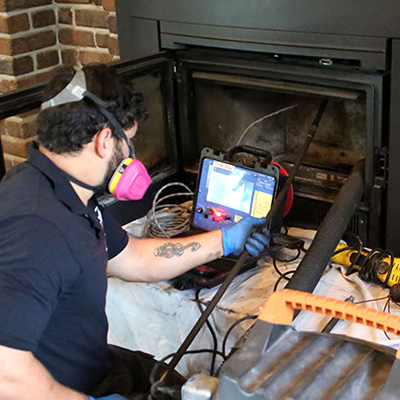
Your chimney liner is an essential safety component for protecting your home and family from a devastating fire and exposure to harmful fumes. A chimney inspection is the only way to determine whether it’s time to replace your chimney liner. That’s why national fire safety experts and chimney professionals, including Fluesbrothers, encourage all homeowners with solid or liquid fuel appliances to have annual chimney inspections. A chimney inspection is a top-to-bottom interior/exterior visual examination of the entire chimney system, including the chimney liner, vents, and attached heating appliances. If a chimney liner replacement is necessary, we typically recommend UL-listed stainless-steel liners for improved energy efficiency, fewer chimney repairs, and long-lasting durability.
Fluesbrothers Chimney & Fireplace is a National Chimney Sweep Guild (NCSG) Certified Chimney Reliner. We have been providing homeowners throughout the Kansas City Metro area with quality chimney services, including certified chimney inspections and chimney liner repairs and replacements for more than a decade. Call (913) 236-7141 or contact us here to schedule an appointment with a certified chimney technician today.
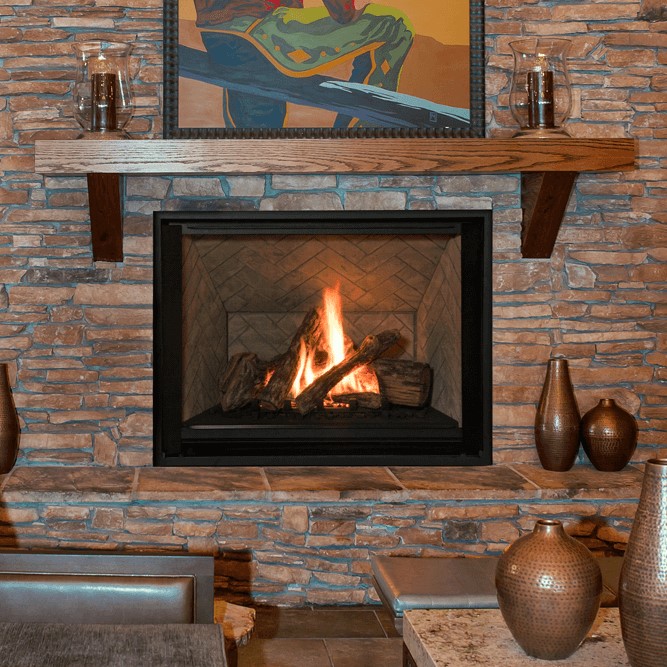 Gas fireplaces have become increasingly popular in homes throughout the Kansas City KS/MO area. It’s not just a feature found in newer homes. Many homeowners residing in older homes are converting to gas fireplaces for their cleaner-burning, energy-efficiency, and lower maintenance features. Although a gas fireplace will provide many years of use, they require routine cleaning and maintenance for optimal performance, like other home heating appliances.
If you’re experiencing problems with your gas fireplace, try these troubleshooting tips before calling your gas fireplace repair technician:
Gas fireplaces use gas and electricity to operate. As the gas is delivered to the pilot light in the fireplace, an internal electronic ignition system lights the flames. So, if your gas fireplace won’t turn on, it typically indicates an interruption in the fuel supply or electrical system.
One of the most common reasons a gas fireplace won’t turn on is often an extinguished pilot light. A strong downdraft, an interruption in the fuel line, or a build-up of soot and dust can cause the pilot light to flame out. If the pilot light is off, follow the manufacturer’s instructions for lighting the pilot in your gas fireplace.
Gas fireplaces have a fuse for the electronic ignition system, and a power surge may have tripped the circuit breaker preventing your gas fireplace from igniting. If the circuit breaker is off, flip it to the on position.
There is a gas valve in the fireplace. Turning it off stops the flow of gas into the fireplace. First, check to ensure that the gas valve is OPEN and that it is in the ON position.
Ensure the propane tank valve is also open and there is sufficient gas in the tank. If you have a natural gas line, verify that the main shutoff valve is also Open. If the main gas line is open but isn’t delivering gas, contact your local gas utility company to determine if there is an interruption in your gas service.
The thermocouple is an electrical sensor between the gas valve and the pilot light. It measures the temperature to determine when to ignite the fireplace based on your thermostat setting automatically. Newer gas fireplaces have a thermopile that performs the same functions as a thermocouple in older units. Since the thermocouple and thermopile are temperature sensors, sometimes the fix is as simple as adjusting the thermostat setting for your gas fireplace. First, try raising the temperature setting to see if your fireplace ignites. If it still doesn’t ignite, the thermocouple may need to be tightened or readjusted. Make sure it is screwed on tight and in the proper position. If the fireplace still won’t go on or the pilot light keeps going out, the thermocouple or thermopile may need to be replaced.
If your pilot is lit and the fireplace isn’t igniting when you push the button or flip the switch, the igniter may be dirty or defective. Clear away any dirt or debris that may be in the way between the igniter and thermocouple or thermopile.
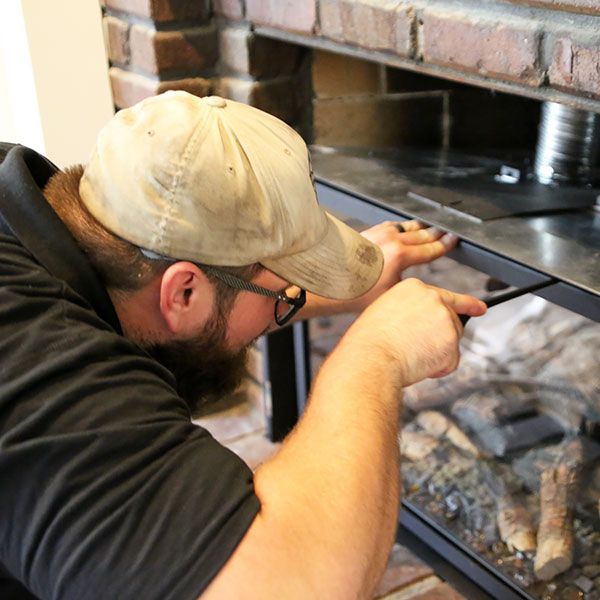 The Gas Flame is Low
A clogged or faulty burner can cause performance issues resulting in a low gas flame. In addition, carbon build-up, gas residue, and debris can inhibit the burner’s ability to function correctly, leading to premature failure. If cleaning the burner doesn’t solve the problem, it may need to be replaced.
It is perfectly normal for a gas fireplace to emit a slight odor. When you have a new gas fireplace installed, you may smell the factory chemicals and paint burning off when you first light the fireplace. It is temporary and will dissipate. However, if you smell a rotten egg odor, your fireplace may have a gas leak. Immediately evacuate your home and contact your local gas utility for emergency service.
Small animals, soot, debris, and vent or chimney moisture can cause a foul odor in the fireplace. Your gas fireplace can also pick up other scents like pet dander, cigarette smoke, and household cleaning products, for instance.
Whether you have a vented or ventless gas fireplace, annual inspection, cleaning, and maintenance can prevent premature failure and prolong its useful life. If the above troubleshooting tips didn’t resolve the issue, schedule a service call with a qualified gas fireplace repair technician like Fluesbrothers.
In spite of all that goes on inside your fireplace and chimney, both should be virtually odorless; a normal working fireplace will send the smell up and out of the chimney with the draft long before it ever has the chance to creep into your home. In addition, the room in which your fireplace or stove is located shouldn’t have much, if any, smell either. In fact, the presence of an unpleasant smell or of any smoke inside your home almost always indicates that your chimney requires some professional attention. In other words, if your chimney stinks to high heaven, that’s just its way of telling you something is wrong.
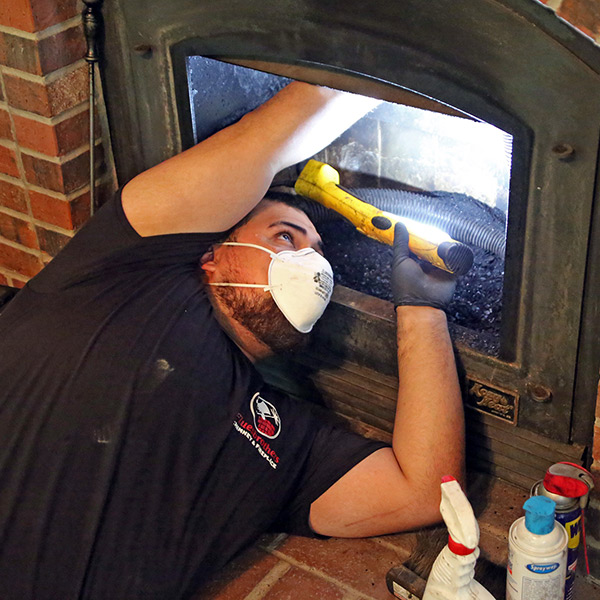
We often recommend starting the chimney odor removal process with a good chimney sweeping and cleaning. Otherwise attempting odor removal is a lost cause—like putting perfume on to mask body odor rather than taking a shower. By having your chimney cleaned, you’ll be removing all the built-up creosote that has accumulated.
Creosote, which is a byproduct of burning wood, is usually what creates that strong smoky smell.
Still other people say they detect a musty, mildew smell. This type of smell tells us that water is getting inside your chimney and that water damage may have occurred. In addition, the propagation of mold inside your chimney can be a detriment to your family’s health. There are many ways Fluesbrothers Chimney Service can keep water out of your chimney in the future, including installing a chimney cap or top-sealing damper and waterproofing your chimney’s exterior.
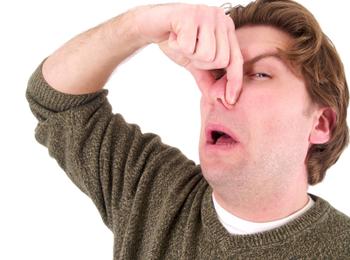
If your chimney is drawing smoky smells directly into your living space this is a pretty good indicator that your chimney has a drafting problem, which may be caused by a blockage or by an improperly sized chimney. A quick solution to your draft issue is to crack a window. For a more permanent approach, you must limit the amount of air that’s able to come down your chimney in the first place; top-sealing dampers can help get rid of the airflow.
A chimney leak is nothing to take lightly, no matter how “minor” it seems to be. If a chimney has begun to take in water, the problem will only get worse over time rather than better.
A leak is defined as any situation in which water from rain or melting snow can get into the chimney system either through the masonry or one of the chimney’s components such as the chimney crown, chimney cap or chimney flashing, which seals the gap between the roof and the exterior chimney.
Here are 4 signs that indicate your chimney is leaking or likely will begin to leak soon.
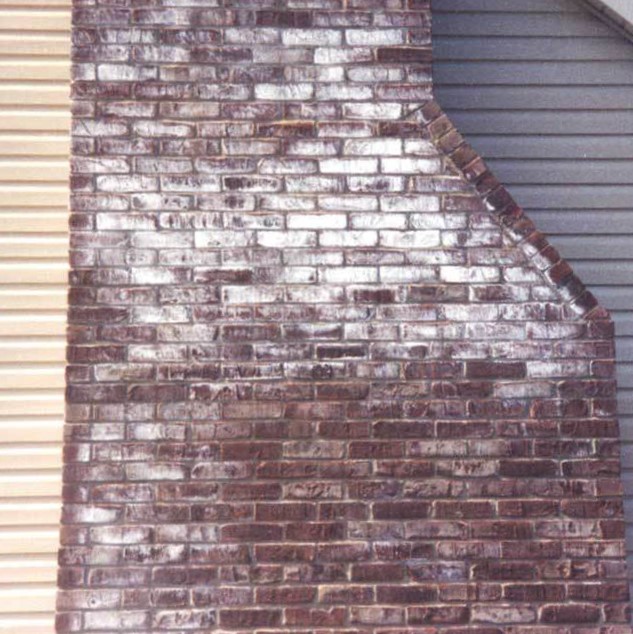 Efflorescence
Efflorescence is a white, salt-based residue that forms when water moves into or through a chimney’s bricks. The water can come from outside the chimney in the form of rain, or from inside the chimney in the form of condensation.
In either case, efflorescence should not be ignored – particularly when a lot of it is visible on your chimney’s exterior masonry.
Water erodes bricks and mortar. If you notice areas of crumbling within the masonry surface or on the roof near the chimney, the problem could be old age, but it also could be a sign of water damage.
When bricks and mortar are compromised, water can regularly move into the cracks and spaces and begin a cycle of decay. Worsening matters is very cold air temperature, which causes the water to freeze and expand. What starts as a small chimney leak can eventually lead to major structural damage.
Dampness on the walls and ceiling near the chimney/fireplace means water is getting in somehow. The source could be leaks in the chimney’s masonry, roof damage or warped flashing that allows water to move down the chimney below the roof.
No matter the cause of the damp sections, the problem must be addressed quickly before your home’s building materials are seriously damaged and/or a dangerous outbreak of mold begins.
If your chimney doesn’t have a chimney cap, water in the firebox could be from rain pouring into the flue. If you do have a cap, this sign could point to a leak in the chimney structure.
Water in the firebox often is accompanied by strong musty odors coming from the fireplace. You’ll often notice the smell before you notice the leak.
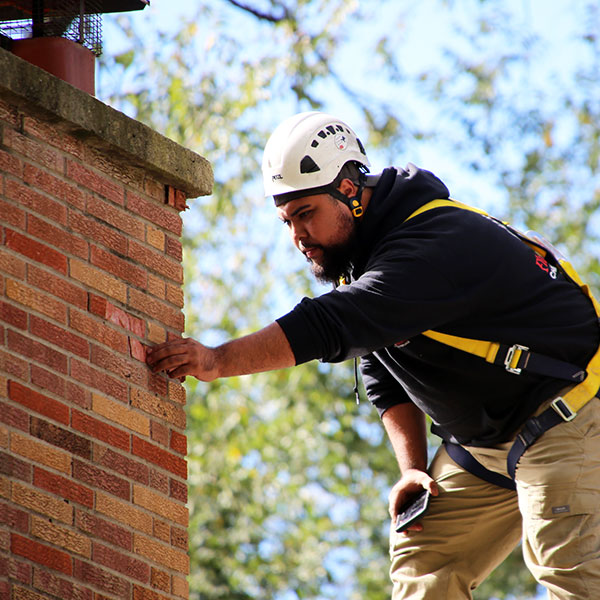 First step: have your chimney inspected
When you notice signs of a leaky chimney, the first thing to do before fireplace use is to schedule a chimney inspection with a licensed, certified chimney inspector.
The inspection will determine where the leak originates, the extent of the damage and what needs to be done to restore soundness to the chimney.
Solutions may include masonry repair work or rebuilding, repair of the concrete chimney crown, chimney liner repair, chimney cap repair or installation, flashing repair or replacement, masonry waterproofing and other tasks. Only a proper inspection will tell you what is required to solve the problem.
Fluesbrothers Chimney & Fireplace of Kansas City, KS, provides professional chimney inspections, leaky chimney repair, CSIA-certified chimney sweeping and related services that will keep your chimney safe and operating at peak efficiency.
Speak with a chimney expert today at (913) 236-7141 and get on the way to finding and fixing your chimney leak.
If you live in a home that was built without a fireplace, there are many practical reasons to install one in your home. Fireplaces are like individual works of art that not only add character to a living space all year long but provide much-needed warmth and comfort during the winter. Fireplaces have also improved considerably and are now more energy-efficient than ever before. There are energy-efficient wood, pellet, gas, and electric fireplaces. There are also zero-clearance and ventless fireplaces for living spaces that are too small for a traditional fireplace. With energy costs on the rise, a fireplace can reduce your home heating costs when you need it the most. Here are a few more reasons to install a fireplace in your home.
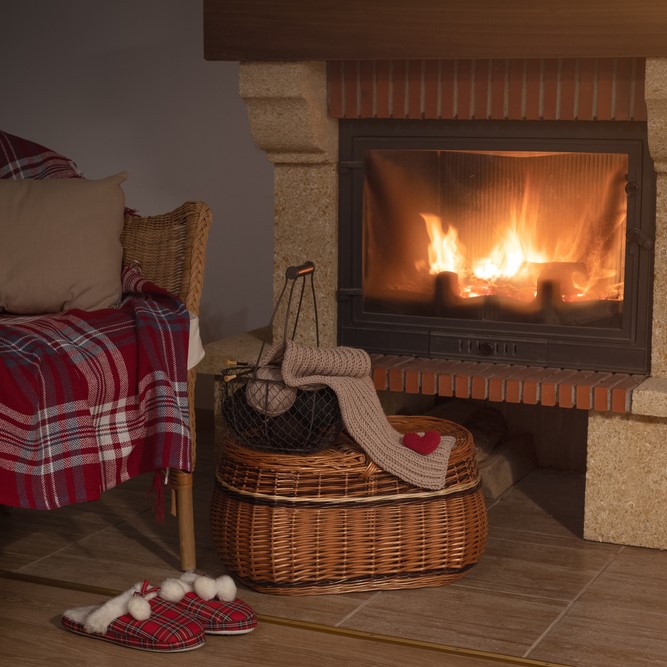
Fireplaces are a charming focal point of the room that naturally draws people into its warm and inviting atmosphere. They are available in a wide assortment of shapes, sizes, styles, and even colors, allowing homeowners to create the perfect ambiance in their home. Whether it’s a traditional wood-burning fireplace, modern gas or pellet fireplace, or a sleek electric fireplace, they are an architectural element that will add character to any living space.
According to a recent study, Kansas has the 23rd highest utility rates in the country. Installing an energy-efficient fireplace can reduce heating costs and dependency on the utility during the winter. Fireplaces can also be used for zone heating. Instead of heating the entire home with a central heating system, fireplaces warm the occupied rooms. Depending on the model, a fireplace can heat up to 1,000 square feet or more of living space.
Fireplaces are more affordable than many people may realize. Just like any other home improvement project, the cost can vary depending on a variety of factors such as location, whether a chimney or vent is required, and type of fuel, for example. While a traditional masonry fireplace is often the most expensive option, pre-fab fireplaces and fireplace inserts are lower-cost alternatives making the addition affordable for any budget.

A fireplace is a desirable feature that may even increase your home’s value. A 2016 Angie’s List survey of real estate agents found that a fireplace can increase a home’s value from $1,000 to $4,999. In a recent home buyers survey, the National Association of Realtors stated that heating and cooling costs were the most important environmental feature. Also, The National Association of Home Builders found that 51% of home buyers consider a gas or wood-burning fireplace to be a desirable home feature.
Winter storms and power outages seem to go hand-in-hand. If your home relies on central heating, your ability to stay warm goes out until the power is restored. On the other hand, gas and wood-burning fireplace don’t require electricity and will keep your space warm and cozy and give some light to the room during a power outage.